
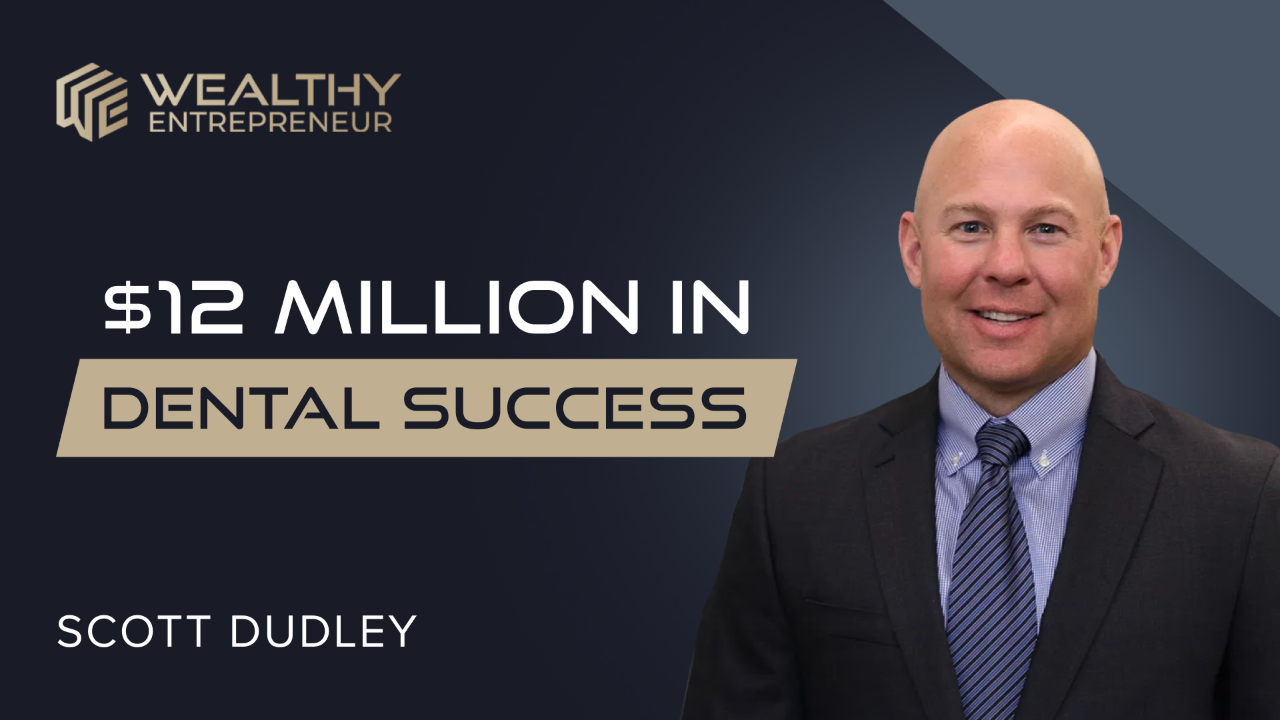
Episode 147: Why 90% of Multi-Location Practices Fail & What Scott Dudley Did Differently
Jun 16, 2026As an entrepreneur, you likely hit a point where you feel like your growth is no longer aligned with your work-life balance. Scott Dudley, Founder and CEO of Branin Center for Dentistry, faced this exact crossroads when he scaled his dental practice to $5M in revenue.
But instead of continuing to hustle harder, Scott realized that the systems that worked for his smaller practice were now holding him back from further growth and personal freedom.
This realization at the $5M mark is a common moment for most entrepreneurs. So, what happens when you hit that wall? You can either double down on the same systems and burn out or take a step back and rebuild.
Scott chose the latter and it paid off. Here are the key takeaways from their conversation.
The $5M Inflection Point: What Got You Here Won't Get You There
The $5M revenue mark is an inflection point where most founders face a harsh truth: their business can’t scale with the systems that got them to that point.
“It wasn’t a productivity problem,” Scott explains. “It was a structural problem.”
When a business starts scaling beyond its current model, its systems must adapt to handle the added complexity. Without this shift, things start to break down. Scott had created a business model where he was the bottleneck. Every decision had to go through him, and while his team was competent, they lacked ownership in the business. As a result, he felt isolated, overwhelmed, and on the verge of burnout.
The Missing Piece: Brand Standards and Operational Systems
Scott recognized that the only way to scale without sacrificing quality was to build systems that didn’t rely on him. He focused on creating brand standards - a 55-page manual outlining every step of the patient experience, from scheduling to clinical care. This became the playbook for how to deliver consistent, high-quality dentistry, regardless of which dentist was treating the patient.
By developing these repeatable, documented systems, Scott ensured that new hires didn’t have to guess what excellence looked like. Everything was clearly defined—from how to handle patient complaints to what an “ideal” dental experience should feel like.
This allowed the business to scale without the quality being compromised, creating a “Starbucks-like” consistency across locations.
Building a Culture-First Approach to Recruitment
What truly set Scott’s dental practice apart was his intentional approach to culture. Instead of chasing after candidates with job postings, he created an environment where top talent came to him. He built a culture that was fun, rewarding and offered real growth opportunities.
By paying top-tier salaries and providing meaningful advancement paths, Scott attracted talent by “osmosis” - people heard about the culture and sought out the opportunity to join his practice. This culture-first approach meant that recruitment became a self-reinforcing cycle: satisfied team members recommended others, and the reputation as a top employer spread.
The Importance of Controlling Your Schedule, Budget and Hiring
One of the most critical lessons Scott learned from his first practice was the importance of retaining control over schedule, budget and hiring. These three elements are what allow a business owner to maintain autonomy and control over the direction of the company.
Once you lose control of these levers, you surrender your business to external pressures, whether from private equity firms or other outside influences.
Scott’s decision to step away from a PE-backed model and re-establish ownership over these three elements is what allowed him to build a sustainable, dentist-led business. He ensures that doctor autonomy is never compromised and that the quality of patient care remains the top priority.
The Systems Reboot: How to Scale Without Compromising
Most dental practice owners and service-based entrepreneurs believe that scaling comes at the cost of quality. Scott proved this is a myth. By systematizing his approach, focusing on leadership, and building a culture that attracts top-tier talent, Scott built a business that was growing, yes - but growing intentionally.
The Bottom Line
The key takeaway for entrepreneurs at the $1M to $10M mark? It’s not about working harder; it’s about building systems that work for you. Scott’s journey offers valuable lessons for scaling any service-based business without losing the very elements that made you successful in the first place.
Listen to Scott’s full story on The Wealthy Entrepreneur Podcast.
🎧 Listen to the full episode here:
Apple Podcasts: https://apple.co/4vM5Jf6
Spotify: https://tinyurl.com/3mayejv6
YouTube: https://youtu.be/7eqDQ8AzEbI
If you’d like to be a part of The Wealthy Entrepreneur conversation, let us know here: https://www.wealthyentrepreneur.co/the-wealthy-entrepreneur-podcast-guest-submission. We’d love to have you on the podcast!
Join our Facebook Group for Entrepreneurs
Unlock exclusive sneak peek resources to help scale your business.
Stay connected with news and updates!
Join our mailing list to receive the latest news and updates from our team.
You may unsubscribe at any time.

